

Chapter 8
08Repentance and Seeking Forgiveness
With every step of my spiritual journey I drew nearer to Allah and felt a continual renewal in my heart. But I realised there was another side, no less important than giving, prayer and fasting: tawbah and istighfar, repentance and seeking forgiveness.
By nature people err, and however much one strives in obedience and excellence, the need to return to Allah and seek His forgiveness remains.
One night, sitting quietly after the Isha prayer, I felt the weight of sins I had not paused over in my daily life: moments of weakness, slackness in obedience, and times I had not given my relationship with Allah the attention it deserved. I felt the time had come for sincere repentance.
I sat on my prayer mat and raised my hands: “O Allah, I seek Your forgiveness and repent to You from every sin I have committed, openly or in secret; forgive me and pardon me, for You are the Most Forgiving, the Most Merciful.”
These were not words to be said, but real remorse and a wish to put things right.
With every word the weight gradually faded; istighfar freed me from guilt and gave me a chance to renew and begin again. Allah loves those who repent, and He has promised to forgive whoever returns to Him with a sincere heart.
﴿ قُلْ يَا عِبَادِيَ الَّذِينَ أَسْرَفُوا عَلَىٰ أَنفُسِهِمْ لَا تَقْنَطُوا مِن رَّحْمَةِ اللَّهِ ۚ إِنَّ اللَّهَ يَغْفِرُ الذُّنُوبَ جَمِيعًا ﴾
“Say: O My servants who have transgressed against themselves, do not despair of the mercy of Allah. Indeed, Allah forgives all sins.” (39:53)
So I made istighfar a regular part of my day: saying Astaghfirullah three times after every prayer, and setting aside quiet time to remember my sins, not for self-flagellation, but to seek forgiveness and become more aware of my actions and behaviour.
Istighfar became an inner cleansing that kept my heart pure and close to Allah.
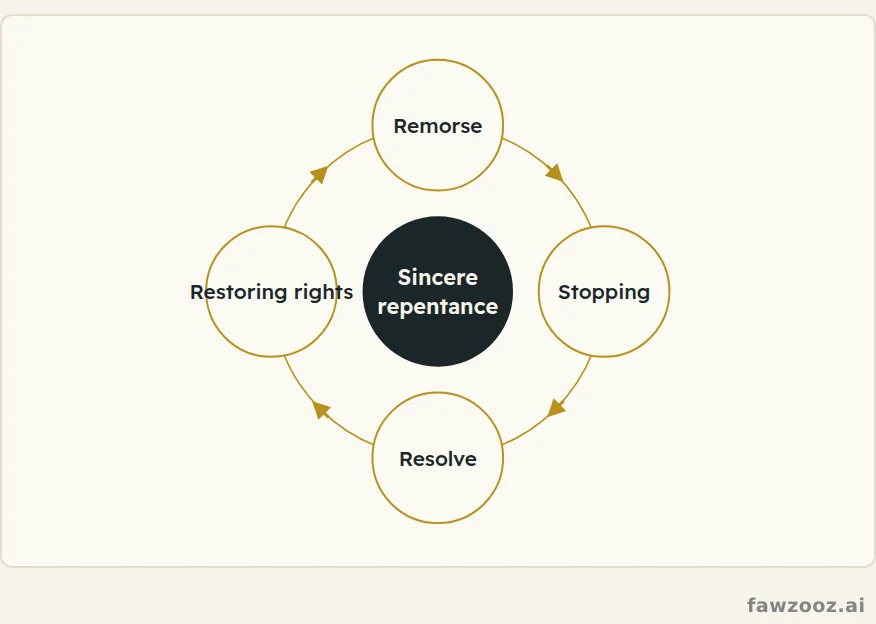
Text in this figure
Sincere · repentance · Remorse · Stopping · Resolve · Restoring rights · Figure 16
I realised repentance is not limited to seeking forgiveness with the tongue; it must be accompanied by a sincere resolve not to return to the sin.
So I reviewed my conduct and relationships, took care to avoid past mistakes, and kept correcting my course to become the person who pleases Allah and lives by the values of Islam.
And where a sin involves another person’s right, completing repentance means returning it to them or asking their pardon.
One day I remembered the story of our father Adam, peace be upon him, and how Allah accepted his repentance after he erred, and realised that error is part of human nature and what matters is returning to Allah and seeking forgiveness.
The story inspired me: repentance is an opportunity Allah grants His servants to renew their relationship with Him and begin again.
On long nights I sat reflecting on my life, remembering every moment of weakness or deviation and asking Allah to help me correct my course. Repentance was no longer only a way to be rid of sins but a way to redirect my life towards the better, and every istighfar brought a new light.
Over time it became part of my daily routine; I did not wait for a big mistake to seek forgiveness, for people err constantly, and daily repentance keeps the heart pure and near, brings rest, and strengthens one against life’s temptations.
When I spoke with friends about repentance one day, I told them: “Repentance is not only about the past; it is a way to live the present and the future better.
Whenever we err, we return to Allah and ask Him to help us not repeat it. It is a chance for continual renewal, so that we become better every day.”
Repentance is not the end of the road but always a new beginning; Allah is near and ready to forgive.
In Today’s World
Some of our mistakes today remain published online long after we repent of them. Completing repentance now includes deleting what we posted of falsehood, backbiting or harm, and apologising publicly to those we hurt; our digital footprint is part of our record of deeds.
Tip: use ← → to move between sections.