

Chapter 9
09Building My Legacy
As I settled into my new life I began thinking about another stage: building my legacy. I did not see legacy only in terms of money or material achievement, but asked: how can I leave a positive, lasting effect on those around me?
One night, sitting on my balcony gazing at the sky, I asked myself: “What do I want people to remember me for?
How can I be a force for positive change in others’ lives?” I realised legacy is not in what I achieve for myself, but in what I give to others.
﴿ إِنَّا نَحْنُ نُحْيِي الْمَوْتَىٰ وَنَكْتُبُ مَا قَدَّمُوا وَآثَارَهُمْ ﴾
“Indeed, it is We who bring the dead to life and record what they have put forth and what they left behind.” (36:12)
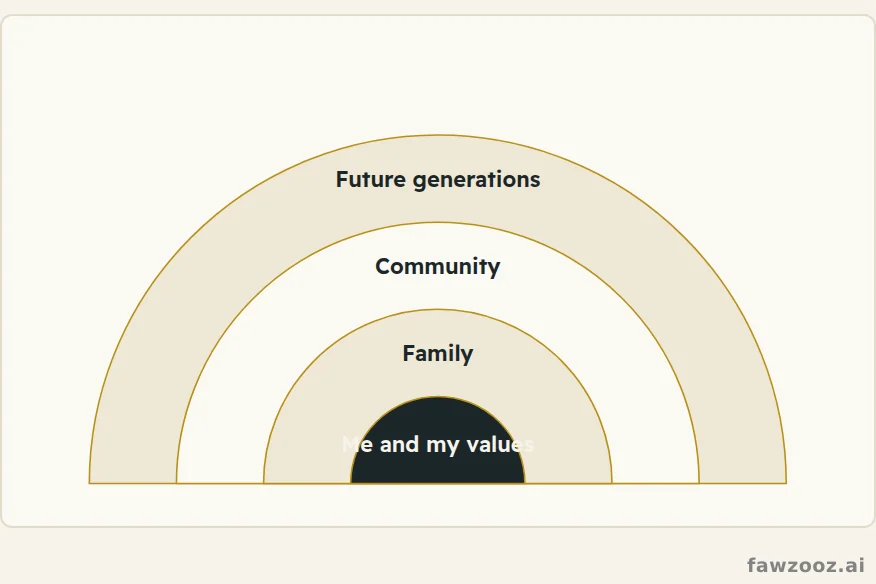
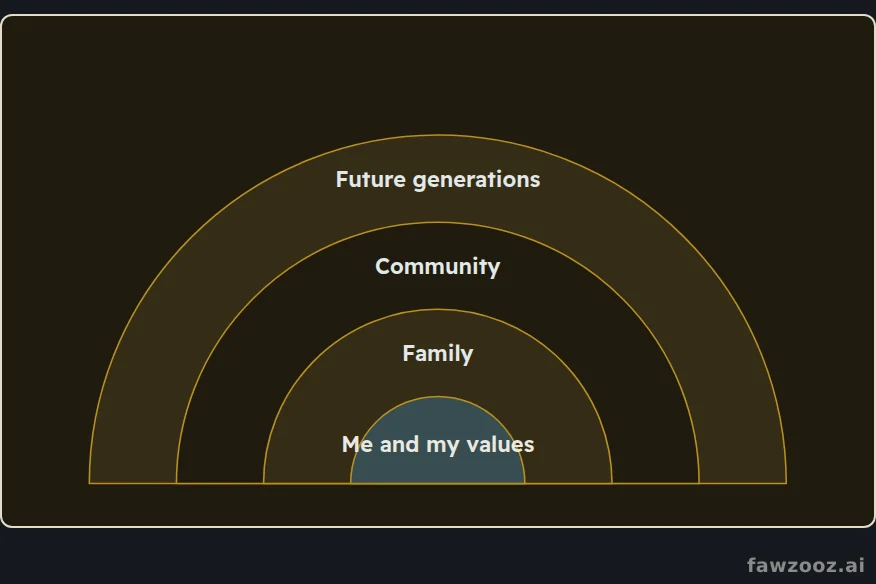
Text in this figure
Me and my values · Family · Community · Future generations · Figure 28
Define the Legacy You Want to Leave
- Your values: What values guide your life: faith, creativity, integrity, compassion? Let your legacy reflect them.
- Your contributions: What do you want to give the world, through your career, creative projects, community or relationships?
- Your audience: Whom do you want your legacy to reach: your family, your colleagues, a wider public?
Exercise: Write Your Legacy Statement
Write one short sentence capturing the legacy you want to leave, reflecting your values, contributions and the impact you hope for. For example: “I want to be remembered for helping people discover their creativity, empowering them to pursue their passions, and building a supportive, compassionate community, seeking the pleasure of Allah.”
Influencing Those Around Me
I thought about how I could offer value to the community and to future generations.
I had experience and knowledge gained over years of work, so I began offering workshops and courses teaching people to balance personal and professional success, with a focus on creativity, positive thinking and emotional sustainability.
The workshops were not only a way to share experience but to engage with people at a deeper level; every participant was a chance for lasting positive impact.
Building a legacy passes through relationships: mentoring and passing on experience, creating a positive culture at work, at home and in the community, and leading by example in word and deed.
Founding a Community Project
Alongside the courses I founded a community project supporting ambitious young people in creativity and entrepreneurship, providing resources and guidance to those pursuing their dreams without the support they need.
I built a network of experts and mentors to help them develop their ideas and realise their projects.
It was not only financial support but guidance and education that change lives for the better; I believe knowledge and guidance are among the best things a person can leave, for “when a person dies his deeds come to an end except for three: ongoing charity, beneficial knowledge, or a righteous child who prays for him.”
Giving as Part of Legacy
I realised giving is not only money and time but the ability to inspire others to become the best versions of themselves; leadership is not only directing people but empowering them to lead their own lives. In one workshop I said: “Giving does not only mean offering something material.
Giving is in the time you spend with someone who needs support, in the smile you give someone having a bad day, in the inspiration you plant in another person.” These words were the heart of my philosophy of life, and “your smile in the face of your brother is charity.”
Sustaining the Impact
A true legacy is the effect that continues after we are gone.
So I focused on building programmes and initiatives that support future generations, and discussed long-term sustainability with my partners: training new leaders to take responsibility, and establishing funds and awqaf to support future projects, so the project could keep serving the community after my role ends.
I thought of my family too: a will written according to the Shari‘ah, my children’s education, and leaving them tools and knowledge that help them succeed.
Celebrating Small Successes
As I built my legacy I realised success is not only in great achievements but in the small steps that make a difference. I celebrated every one: a participant’s success story, or a start-up that launched thanks to the guidance it received.
Legacy is built gradually and does not need grand moments to be valuable; every small success adds to the bigger picture.
Focusing on Core Values
The legacy I want rests on the values I believe in: faith, creativity, giving, sustainability and optimism. I wanted my impact to reflect them, and everything I do to be consistent with them. I kept telling myself: “Legacy is not only what we leave to others, but what we live every day.”
So tell your story, encourage others to think about their own legacy, and pass your wisdom to the next generations through writing, teaching and conversation.
Legacy is not only what we leave to others, but what we live every day.
In Today’s World
Each of us now has a digital legacy: posts, videos and accounts that may outlive us. Let what you publish be beneficial knowledge or a good word, and think about who will manage your accounts and digital documents after you; they are part of your ongoing charity, or of your reckoning.
Tip: use ← → to move between sections.