

Chapter 6
06Designing Emotional and Spiritual Health
After overcoming challenges with creativity, my working life became more balanced and productive. But another area needed more care: my emotional and spiritual health. Outer success is incomplete without inner peace, and caring for mind and body must go hand in hand with caring for the soul.
One day, after a long work session, I felt mentally and emotionally tired; my body needed rest, but my need to connect with myself at a deeper level was greater.
So I sat quietly in my room reflecting on my feelings and state of mind, aware that emotional and spiritual health is no less important than professional success; it is the foundation on which the whole of life is built.
Text in this figure
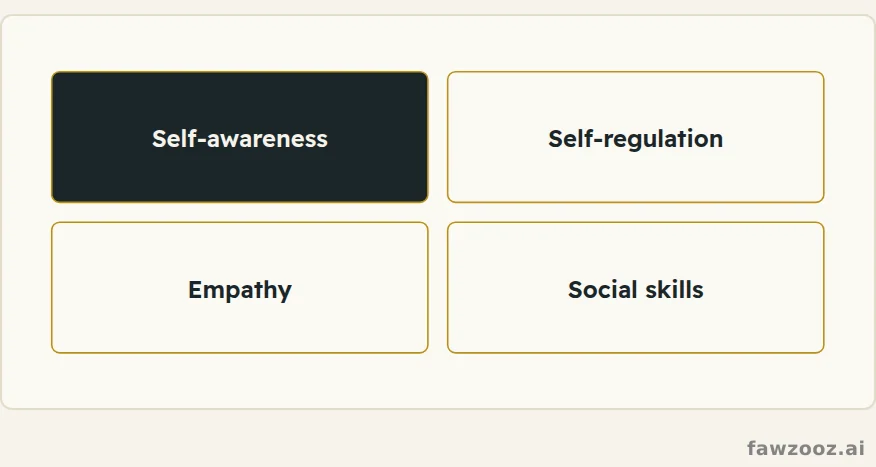
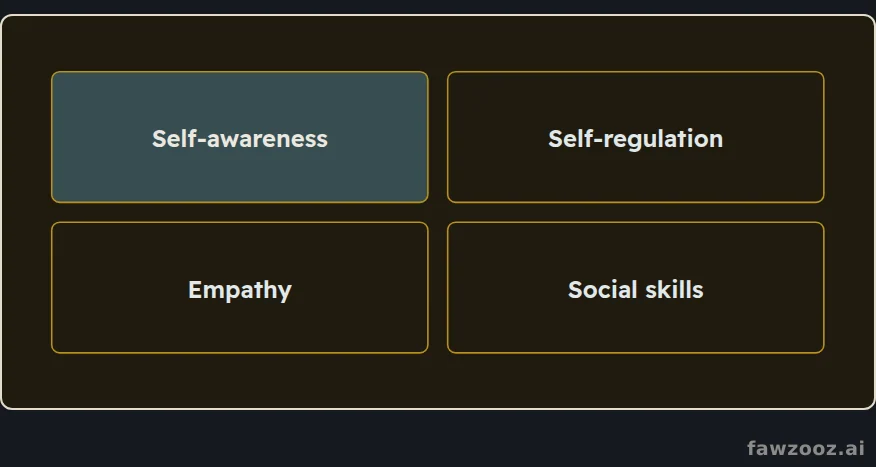
Self-awareness · Self-regulation · Empathy · Social skills · Figure 25
Caring for Emotional Health
Dealing with stress and pressure is part of daily life, so I began building new habits to manage them. I set aside a few minutes each morning after Fajr to sit quietly, breathe deeply and remember Allah, calming myself and renewing my energy before the day began.
I began writing my feelings in a journal, positive and negative alike, and writing ordered my thoughts and gave me a kind of inner release.
And I became more aware of my feelings during the day; instead of ignoring anxiety or tension I took short moments at work to check my state of mind and rest if needed. These small habits noticeably improved my emotional state.
- Self-awareness: Notice your emotions and what triggers them.
- Self-regulation: Take a deep breath before responding, and step away from a conflict until you are calm.
- Empathy: Understand and share the feelings of others.
- Social skills: Listen actively, communicate clearly and resolve conflicts positively.
- Healthy boundaries: Learn to say no when necessary and protect your time and energy from what drains them.
- Forgiveness: Holding on to anger and resentment harms its holder first; forgiving yourself and others frees the heart. “Let them pardon and overlook; would you not like Allah to forgive you?” (24:22)
Exercise: Daily Emotional Awareness
Spend a few minutes each evening writing: What did I feel today? What triggered it? How did I respond? Over time your emotional patterns, and ways to manage them, will become clear. Add the questions of self-accounting: What do I praise Allah for today? What do I seek His forgiveness for?
Spiritual Balance
Alongside emotional health I needed to nourish my soul. I set aside time for reflection, sitting somewhere quiet to contemplate the greater values and meanings of my life and asking: “What gives my life value?
How do I live in a way that matches my values and pleases my Lord?” Those moments gave me inner peace and renewed my energy to keep striving.
I decided to be more grateful for simple things, taking time each day to remember blessings small and large; gratitude is the key to spiritual happiness, and appreciating the beauty in life changes how one sees the world. Allah says: “If you are grateful, I will surely increase you.” (14:7)
Building Supportive Relationships
I realised that emotional and spiritual health cannot be separated from the relationships we build. So I decided to stay in closer touch with friends and family and to build relationships founded on support and understanding.
I arranged regular gatherings with close friends to talk and enjoy time together away from daily pressures, which gave me a sense of belonging and support.
I also improved how I dealt with colleagues: more patient and understanding, listening carefully to their feelings, because healthy relationships rest on emotional connection that supports everyone’s wellbeing.
Keeping ties of kinship is one of the greatest doors of this support: “Whoever would like his provision to be expanded and his life extended, let him maintain his ties of kinship.”
Balancing Reflection and Action
- Live your values: Make decisions that match your values; consistency between action and belief brings peace.
- Contribute to others: Acts of kindness and service enrich your emotional and spiritual health alike.
- Pursue meaningful goals: Set goals that serve your spiritual and emotional aspirations; they give you direction and purpose.
The Result: Inner Peace
Over time I felt a real change in my psychological and spiritual state. I was not only more productive; I felt an inner peace I had never known. Real success does not come from material achievements alone but from an all-round balance between work and emotional and spiritual health.
I now had an integrated daily system caring for body, mind and soul: time for worship and reflection, time for people, and time for myself away from pressure.
These habits gave me the strength to face challenges calmly and steadily. The journey continues, but I had taken large steps towards that balance.
In Today’s World
Young people’s mental health now tops the list of global concerns, with digital isolation and the pressure of comparison. Seeking specialist psychological help does not conflict with faith; it is part of taking the means. Choose professionals who respect your values and culture.
Tip: use ← → to move between sections.