

Chapter 3
03Building a Creative Mindset
After defining my vision I felt a new energy flowing within me. But vision alone is not enough; I needed tools to turn it into reality, above all a creative mindset that lets me meet challenges with flexibility and optimism and see opportunity in every situation, however hard.
I read about successful people who used creative thinking to reach their goals and found a common thread: they were not afraid of failure, but saw it as a chance to learn rather than an obstacle. I reflected on that lesson; fear of failure had often held me back.
I hesitated to try new ideas in case they failed and worried about how others would see me if I made a mistake. So I decided to change how I think, and to accept failure as part of the journey, not its end.
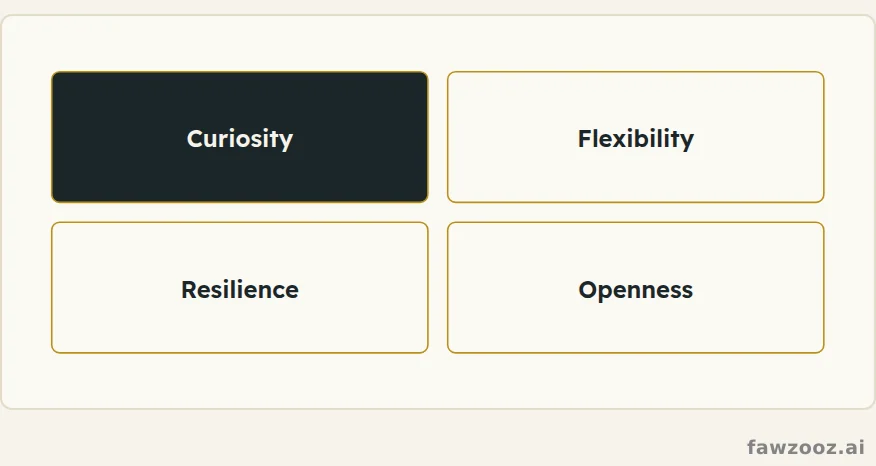
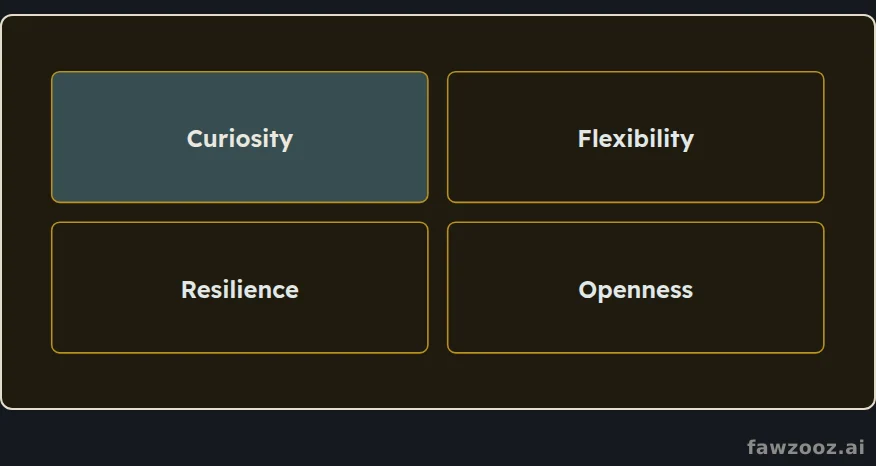
Text in this figure
Curiosity · Flexibility · Resilience · Openness · Figure 21
Six Practices of a Creative Mindset
- Lifelong learning: Read outside your field, take online courses, join communities that enrich your thinking; the more ideas you meet, the more connections your mind makes. And “whoever travels a path seeking knowledge, Allah makes easy for him a path to Paradise.”
- Divergent thinking: Generate many solutions to a single problem before judging them: free brainstorming, “what if?” questions, and combining ideas that seem unrelated.
- Cultivating curiosity: Ask “why?” and “how?”, explore the unfamiliar, and challenge your assumptions instead of taking things at face value.
- Embracing failure: Reframe failure as learning, celebrate small wins, and experiment without fear.
- A collaborative spirit: Seek feedback, work with diverse teams, and share your ideas generously; diversity is one of the strongest drivers of creativity.
- An environment for creativity: Arrange your space to inspire you, surround yourself with people who challenge you to think differently, and schedule regular time for creative thinking.
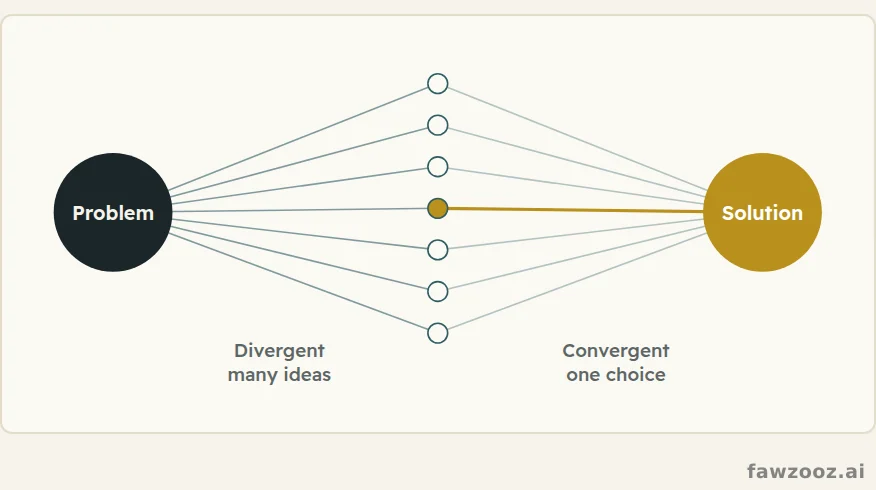
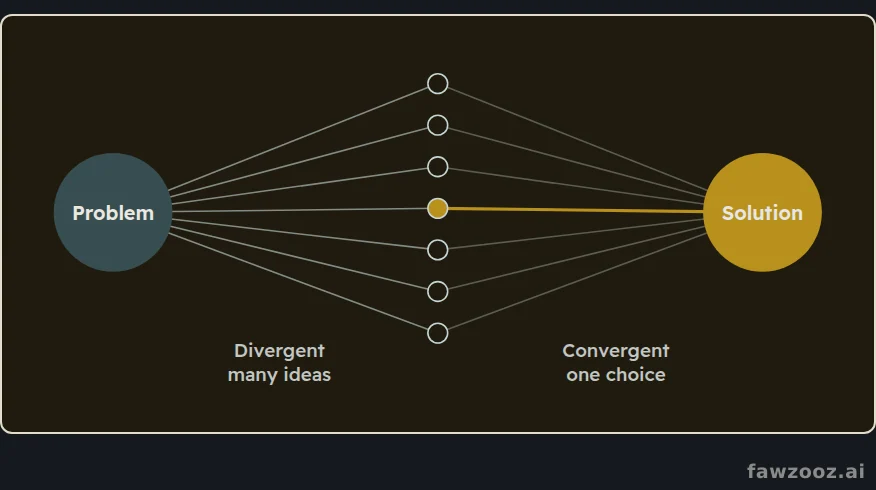
Text in this figure
Problem · Solution · Divergent · many ideas · Convergent · one choice · Figure 22
I began trying new ideas at work, simple ones at first: new techniques for organising my time and different ways of communicating with my team. Sometimes they succeeded brilliantly, sometimes they failed; but instead of frustration I learned from each attempt and adjusted course.
I realised creative thinking is not limited to work problems, so I began handling hard situations in my personal life differently, asking: “How can I deal with this in a new way?
How can I turn it into an opportunity to grow?” Over time I stopped seeing challenges as obstacles and saw them as chances to think outside the box, becoming more flexible and optimistic.
Putting It into Practice: A New Project
I decided to apply this mindset to a real project. There was an idea that had long been with me, but fear of failure had kept me from carrying it out. So I began a small project that used my skills, challenged me and held everything I had learned, and made it a reflection of my vision.
I knew success might not come quickly, but what mattered most was the experience: to learn from every step and enjoy the journey, not only the result. At every stage I faced new challenges and asked myself: “What unconventional ways can I use to solve this problem?”
Over time the project began to flourish, not only because of good planning but because of creative thinking and flexibility in the face of challenges, and before all that by the help of Allah.
My journey in building this mindset was beginning to bear fruit, and the future held more chances to learn and grow.
In Today’s World
The most important skill in today’s job market is not what you know but how fast you learn and relearn. Set a fixed weekly learning hour, however short, and choose reliable, beneficial sources; beneficial knowledge is among the things whose reward continues after death.
Tip: use ← → to move between sections.