

Section 08
8Inclusive Leadership: The Socio-Psychological Catalyst
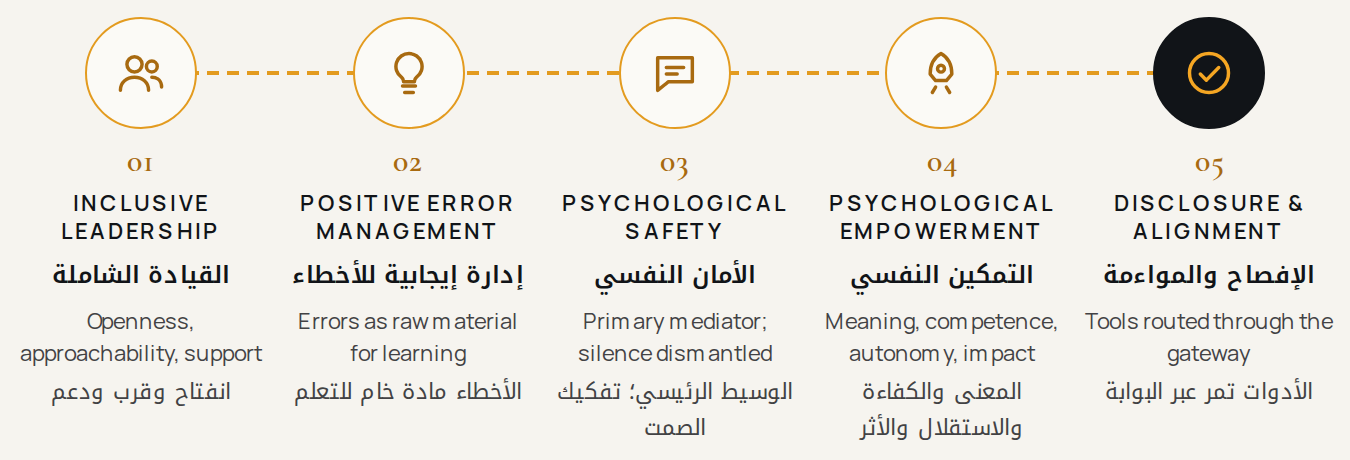
The most sophisticated gateways, guardrails and pipelines are obsolete if the workforce refuses to use them. When governance focuses only on restriction and punishment, developers bypass the gateway through personal devices and browser extensions. Integrating shadow AI is fundamentally an exercise in organizational psychology, and inclusive leadership — openness, approachability and visible support — is the catalyst.
Inclusive leaders counter concealment by building a positive Error Management Culture (EMC), after Frese and Keith: errors can never be eradicated, but their negative consequences can be minimized and their learning value maximized. Leaders model this by admitting their own knowledge gaps and showing that mistakes will not cost reputation or resources.
This raises psychological safety — the shared belief that one will not be humiliated or punished for speaking up. Research shows a strong positive correlation between error-management climate and psychological safety, which acts as the primary mediator of ‘bootleg’ innovation. Relational silence — withholding ideas because of hierarchical distance — is dismantled, and the register shifts from policing tool to collaborative platform.
Text in this figure
01 · Inclusive leadership · Openness, approachability, support · 02 · Positive error management · Errors as raw material for learning · 03 · Psychological safety · Primary mediator; silence dismantled · 04 · Psychological empowerment · Meaning, competence, autonomy, impact · 05 · Disclosure & alignment · Tools routed through the gateway
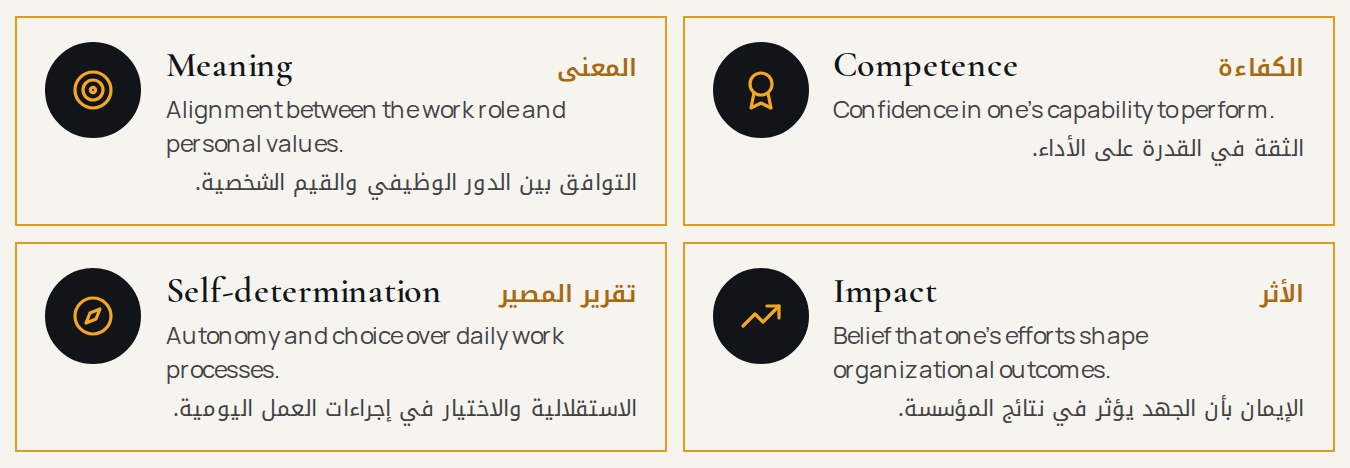
The final mechanism is psychological empowerment. Structural equation modelling across high-tech industries shows inclusive leadership raises innovative work behavior directly and through empowerment. Under Cognitive Evaluation Theory, delegation, autonomy and constructive feedback shift the employee’s locus of causality inward. Empowered employees have no reason to build in secret: they channel their tools through the gateway and work with security teams on guardrails and CI/CD.
Text in this figure
Meaning · Alignment between the work role and personal values. · Competence · Confidence in one’s capability to perform. · Self-determination · Autonomy and choice over daily work processes. · Impact · Belief that one’s efforts shape organizational outcomes.
Tip: use ← → to move between sections.